
Servicebio is located in the Optics Valley Biolake, Wuhan, Hubei province. The company integrates research and development, production, and sales, providing a series of products and testing services for global life science research institutions, scientific research institutes, biopharmaceuticals, and in vitro diagnostics companies. Servicebio is committed to providing a one-stop product solution for life science research and becoming a comprehensive supplier of life science.
Our products mainly include protein biology reagent, reagent bottle, molecular biology reagent, 100 mm cell culture dish, Lab instrument, etc.
-
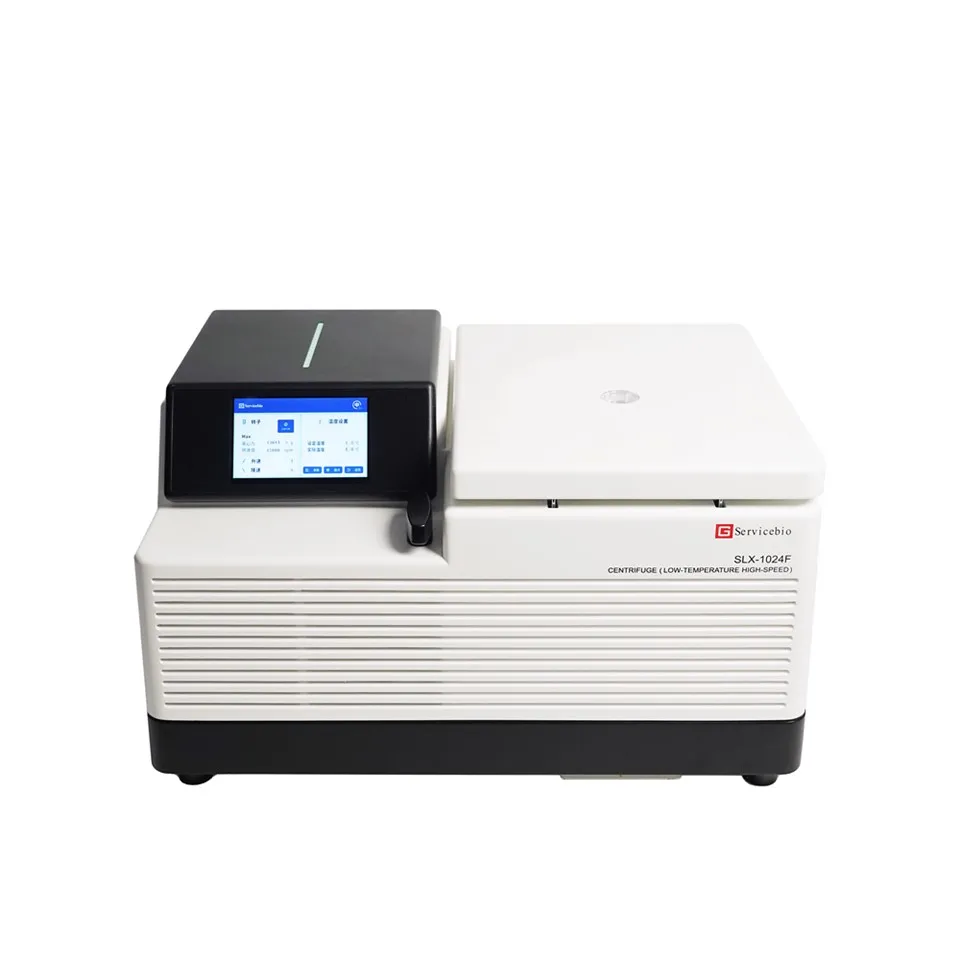
![Low Temperature High Speed Centrifuge]() Low Temperature High Speed CentrifugeCat.No.: SLX-1024F. Maintain a low temperature of 4°C continuously for a long time at a speed of 12000 rpmread more
Low Temperature High Speed CentrifugeCat.No.: SLX-1024F. Maintain a low temperature of 4°C continuously for a long time at a speed of 12000 rpmread more -
![3D Cryogenic Tissue Homogenizer]() 3D Cryogenic Tissue HomogenizerCat.No.: SWE-3D. Tissue Homogeinzer (3D, Frozen). ∞-shaped high-speed operation for tough samples; -50°C protects RNA and proteins; -20°C chamber for low-temperature experiments.read more
3D Cryogenic Tissue HomogenizerCat.No.: SWE-3D. Tissue Homogeinzer (3D, Frozen). ∞-shaped high-speed operation for tough samples; -50°C protects RNA and proteins; -20°C chamber for low-temperature experiments.read more -
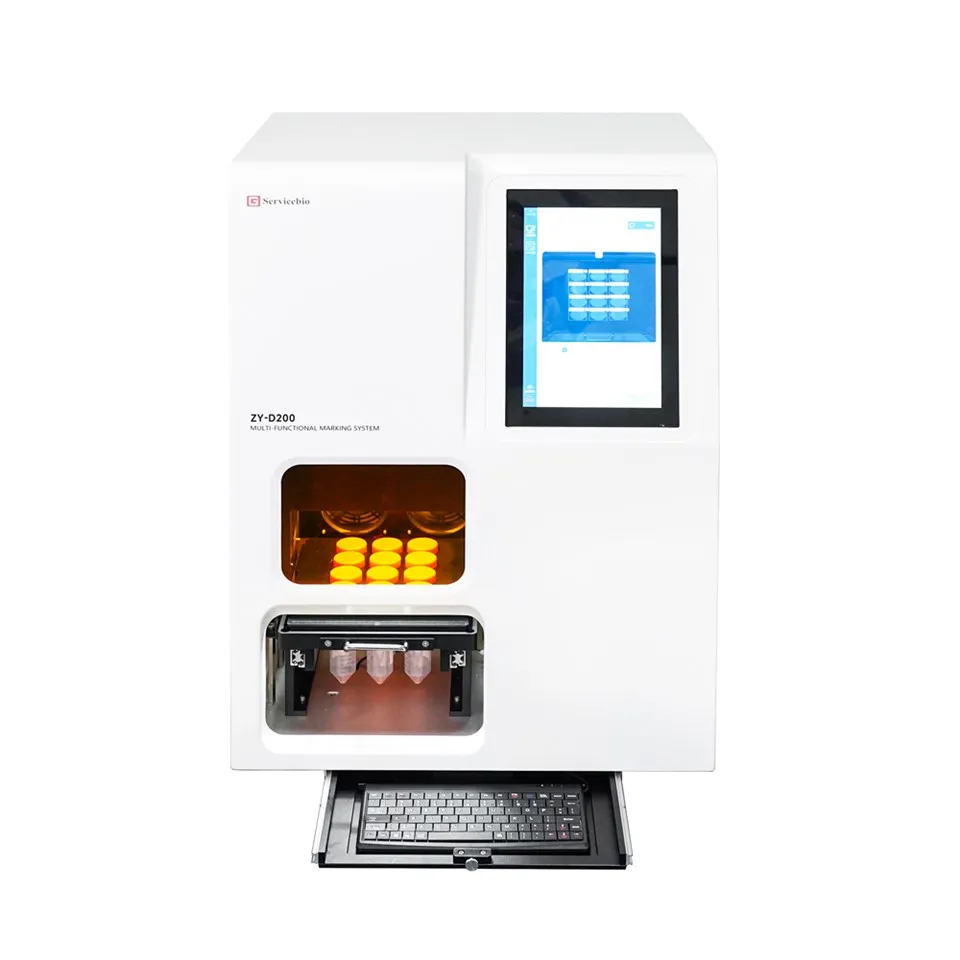
![Multifunctional Marking System]() Multifunctional Marking SystemCat.No.: ZY-D200. Rapid Batch Laser Marking, Permanent Information Retentionread more
Multifunctional Marking SystemCat.No.: ZY-D200. Rapid Batch Laser Marking, Permanent Information Retentionread more -
![Multifunctional Imaging System]() Multifunctional Imaging SystemCat.No.: SCG-W5000. Integrated with a chemiluminescence system and a gel imaging system,Western Blotting membrane detection, nucleic acid gel imaging/gel cutting, and protein gel imaging.read more
Multifunctional Imaging SystemCat.No.: SCG-W5000. Integrated with a chemiluminescence system and a gel imaging system,Western Blotting membrane detection, nucleic acid gel imaging/gel cutting, and protein gel imaging.read more -
![Electrophoresis System (Transfer)]() Electrophoresis System (Transfer)Cat.No.:SVT-2. Brand:Servicebio. Spec.:Set (Programmable).read more
Electrophoresis System (Transfer)Cat.No.:SVT-2. Brand:Servicebio. Spec.:Set (Programmable).read more -
![Electrophoresis System (Vertical)]() Electrophoresis System (Vertical)Cat.No.:SVE-2. Brand:Servicebio. Spec.:Set (Programmable).read more
Electrophoresis System (Vertical)Cat.No.:SVE-2. Brand:Servicebio. Spec.:Set (Programmable).read more -
![Transfer-Blot Module]()
-
![Electrophoresis Power Supply (Programmable)]() Electrophoresis Power Supply (Programmable)Cat.No.:SPW-6S. Brand:Servicebio. Spec.:Set (Programmable).read more
Electrophoresis Power Supply (Programmable)Cat.No.:SPW-6S. Brand:Servicebio. Spec.:Set (Programmable).read more -
![Slides Marking System]() Slides Marking SystemProduct Information Compared with silk-screen printing, laser marking can greatly improve marking efficiency. it allows for manual character input, bulk import of EXCEL files, or scanning with a barcode scanner to enter information, thusread more
Slides Marking SystemProduct Information Compared with silk-screen printing, laser marking can greatly improve marking efficiency. it allows for manual character input, bulk import of EXCEL files, or scanning with a barcode scanner to enter information, thusread more -
![3D Tissue Homogenizer]()
-
![Vacuum Aspirator Adapter]()
-
![PCR Plate Sealer Adapters]()


Why Choose us
Manufacturing Capabilities
The company has mold design and manufacturing capabilities. Processing technologies include injection molding, blow molding, extrusion, and sintering. With its own automation and AI team, the company can upgrade and transform specific products.
Quality Assurance
We pay close attention to detail and ensure quality at every stage of system design, production, installation, and adjustment—earning customer trust through sincerity.
Certification
All of the company’s products comply with international quality standards and have obtained CE and ISO 9001 certifications.
Types of Lab Instrument
The lab instrument produced by our company mainly include the following types


Multifunctional Imaging System
The SCG-W5000 is a comprehensive device that integrates chemiluminescence technology and gel imaging. it is equipped with a high-sensitivity cooled camera with 9 million pixels, enabling rapid, accurate, and high throughput detection and imaging of samples. it is widely used in the fields of life sciences, medicine, and environmental protection.
Multifunctional Marking System
Compared to silkscreen printing, laser marking can greatly enhance the efficiency of coding. This product allows for manual input of characters or bulk import of EXCEL information, effectively avoiding human input errors and achieving high-efficiency coding. With CCD visual positioning, it reduces manual intervention and improves coding quality.
3D Cryogenic Tissue Homogenizer
Tissue Homogeinzer (3D, Frozen) adopts a special 3D operation mode, and the sample moves in a '∞' shape in space,making the frozen sample in the grinding tube collide with the grinding beads. The grinding shear force and impact force generated by the collision completely crush the tissue. It is a dedicated equipment for the rapid one-time processing of multiple samples in research institutions,universities,agricultural colleges, biomedical and food testing fields.
Low Temperature High Speed Centrifuge
The low-temperature centrifuge is widely used in various fields such as biology, medicine, agriculture, and chemical industry, lt is an instrument that utilizes centrifugal force to perform gravity-based fractionation of samples. The maximum speed of this machine is n=12000rpm, and the centrifugal force is RCF=13684xg. This low-temperature centrifuge ensures that the samples do not heat up during centrifugation, providing optimal protection for the samples.
Slides Marking System
Compared with silk-screen printing, laser marking can greatly improve marking efficiency. it allows for manual character input, bulk import of EXCEL files, or scanning with a barcode scanner to enter information, thus avoiding human input errors and achieving efficient marking. with Al visual positioning, it requires less manual intervention and improves marking quality.
Parameter
|
Dimensions |
650×420×430 mm |
|
Weight |
54 kg |
|
Screen Size |
5 inches |
|
Temperature Control Accuracy |
±1℃ |
|
Working Time |
Run time 0-9999s, pause time 0-999s, and run times 1-99 times |
Benefits of Lab Instrument
Low Temperature High Speed Centrifuge
Low temperature high speed centrifuge have many advantages, including:
Cost-Effective: Low temperature high speed centrifuges are generally less expensive to purchase and maintain compared to high-speed centrifuges, making them accessible to a wider range of laboratories.
Ease of Use: These centrifuges are typically straightforward to operate, with simple controls and minimal training required.
Lower Maintenance: Due to the lower operational speeds, there is less wear and tear on the mechanical components, resulting in reduced maintenance needs and longer lifespan.
Capacity: Low temperature high speed centrifuges often come with larger capacity rotors that can accommodate bigger sample volumes, useful for processing large batches.
Magnetic Stir Bar
Magnetic stir bar have many advantages, including:
Uniform stirring: By the action of the rotating magnetic field, the stir bar can provide uniform and stable stirring effect to ensure that the components of the solution or mixture are fully mixed and reacted.
Convenient control: The stirring speed can be precisely controlled by adjusting the motor speed, which can be adjusted according to experimental or production requirements.
No need for direct contact: The magnetic stirrer rotates at the bottom of the vessel without direct contact with the solution or mixture through mechanical devices, avoiding possible contamination and reaction effects.
Good safety: The magnetic stir bar avoids the power transmission part in traditional mechanical stirrers, reducing the risk of accidents.
We're professional lab instrument manufacturers and suppliers in China, specialized in providing high quality OEM service. We warmly welcome you to wholesale bulk customized lab instrument from our factory.
96 Well Deep Well Plate-
![Low Temperature High Speed Centrifuge]() Low Temperature High Speed CentrifugeCat.No.: SLX-1024F. Maintain a low temperature of 4°C continuously for a long time at a speed of 12000 rpmread more
Low Temperature High Speed CentrifugeCat.No.: SLX-1024F. Maintain a low temperature of 4°C continuously for a long time at a speed of 12000 rpmread more -
![3D Cryogenic Tissue Homogenizer]() 3D Cryogenic Tissue HomogenizerCat.No.: SWE-3D. Tissue Homogeinzer (3D, Frozen). ∞-shaped high-speed operation for tough samples; -50°C protects RNAread more
3D Cryogenic Tissue HomogenizerCat.No.: SWE-3D. Tissue Homogeinzer (3D, Frozen). ∞-shaped high-speed operation for tough samples; -50°C protects RNAread more -
![Multifunctional Marking System]() Multifunctional Marking SystemCat.No.: ZY-D200. Rapid Batch Laser Marking, Permanent Information Retentionread more
Multifunctional Marking SystemCat.No.: ZY-D200. Rapid Batch Laser Marking, Permanent Information Retentionread more -
![Multifunctional Imaging System]() Multifunctional Imaging SystemCat.No.: SCG-W5000. Integrated with a chemiluminescence system and a gel imaging system,Western Blotting membraneread more
Multifunctional Imaging SystemCat.No.: SCG-W5000. Integrated with a chemiluminescence system and a gel imaging system,Western Blotting membraneread more -
![Anti-CD68 Rabbit PAb]()
-
![Anti-CD45 Rabbit PAb]()


